
ADHD Identity and Labels, Why Neurocomplexity Fits Better
The alphabet soup of identity
I have spent a lot of time thinking about ADHD labels and identity, especially as a neurodivergent adult trying to make sense of myself.
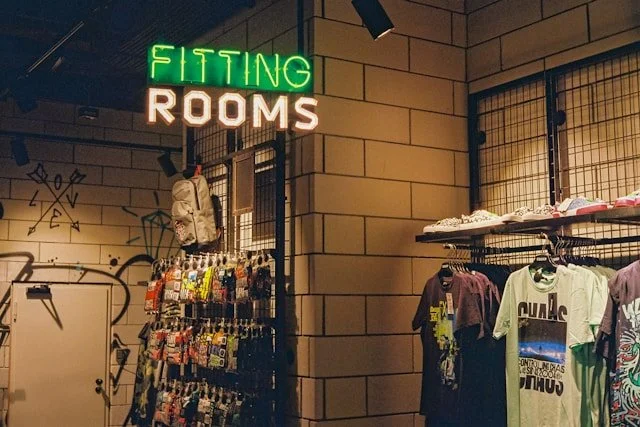
There are the labels we sew into our clothes, and then there are the labels we live inside. Male, female, non binary. Husband, wife, partner. Gay, straight, bi, queer. ADHD, autistic, highly sensitive, C PTSD, gifted, two e. These are just examples, not a checklist of who I am, yet taken together they show how many, and how contradictory, the available labels can be if you are already wired a little differently.
Across my life I have carried many labels. Some I still use. Some I have quietly put down. Each one has offered a different mix of explanation, belonging, bureaucracy and pressure. A label can help you find language, community and the right support for your brain. It can also start to dictate who you are allowed to be, long after it has stopped fitting.
Some labels feel as if they land on top of you rather than arriving with you. Too much. Too intense. Difficult. They get baked into performance reviews, school reports and family stories. Even supposedly neutral clinical labels can feel like this when they are applied to you without your choice, or when they stop evolving as you do.
If you are a late diagnosed or self identified neurodivergent person, you might recognise that tension between feeling seen and feeling pinned down by the very words that were meant to help.
When identity labels multiply faster than meaning
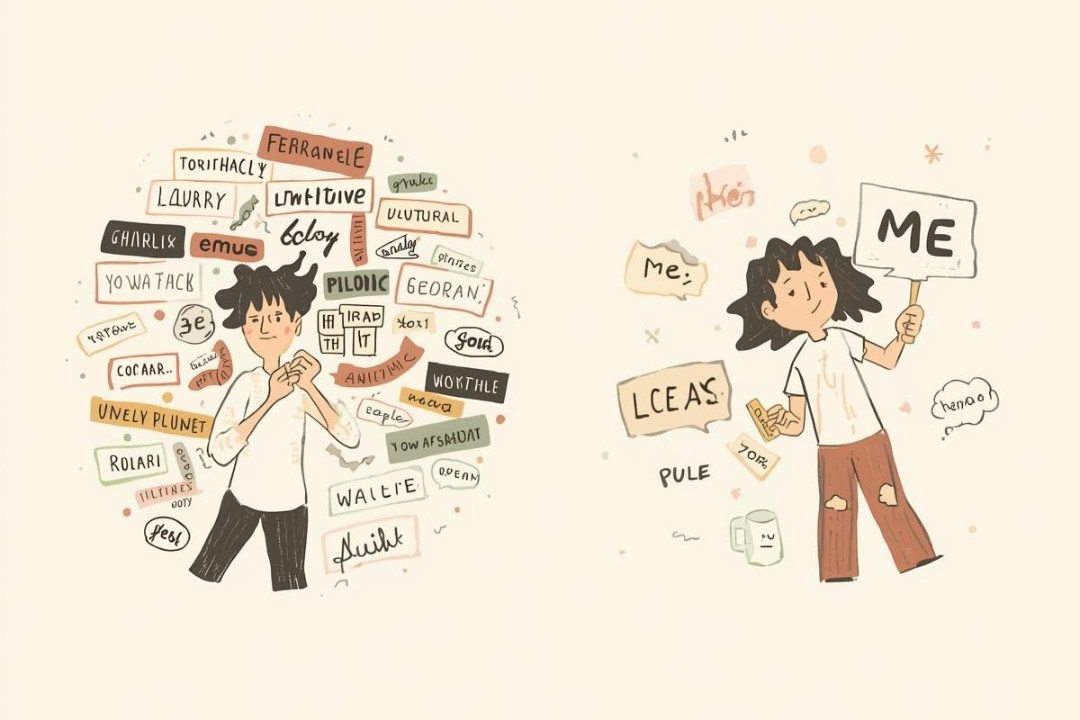
My experience sits inside a wider shift in how we talk about identity and neurodivergence. Language keeps evolving, which is a good thing. There are more ways than ever to describe gender and sexuality, more nuance in how we name race and ethnicity, more words for neurodivergence and mental health.
Twenty years ago, the choices I saw were mostly gay or straight, male or female, and, if we are honest, normal or not normal. Now the frequency with which I have to Google a new acronym or identity label is notably increasing and the range is expanding.
For some people this expansion is pure liberation. Being able to say, I am this very specific thing, not the vague category you put me in, can be life saving. It can open doors to understanding, community, safety and self respect. There are labels I am deeply grateful exist, even if I do not wear them myself.
At the same time, I notice a kind of fatigue in myself. A pressure to get it right, to have the perfect string of letters ready whenever someone asks, so they can place me neatly in their mental filing system. Part of me wants to list everything, to prove that my differences are real and not just in my head. Another part wants to throw all of it in the trash and free myself from the whole identity and label confusion.
Discomfort with being pinned down
What troubles me most now is not that labels exist, it is how quickly they turn from tools into cages. A label that once felt like a key can start to feel like a set of walls. It quietly suggests, this is who you are, this is what you can expect from yourself, this is the script you must follow. It becomes a tool that others use, sometimes arrogantly, to dictate to me who I am.
I notice this most when the label no longer fits as neatly as it did. I grow, heal, burn out, recover and change. I am constantly evolving and yet the label stays the same. Other people learn that word for me and begin to expect consistency. They meet the label instead of the living person. It becomes harder to say, that used to fit and now it does not, or, that is part of me, not the whole story.
I also notice how labels tend to slice me into parts. Here is the ADHD part. Here is the trauma part. Here is the sensitive part. Here is the gifted part. Figuratively, each gets its own blog post, its own book, its own infographic, its own identity. It takes me away from a unified self identity and towards fragmentation. What is much harder to name is the way all of those parts overlap in one nervous system, one life. The way they interact and compound and sometimes contradict each other from one day to the next.
Discovering neurocomplexity
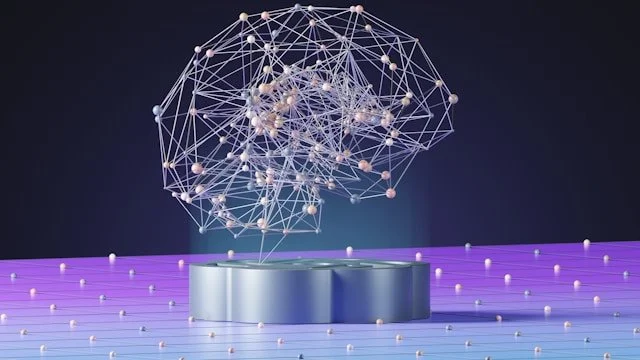
Recently I came across the term neurocomplexity, coined by Lindsey Mackereth, as a way of talking about the whole pattern of a person’s brain, body and life, rather than one neat diagnostic box.
Neurocomplexity describes the interplay of things like cognition, sensory processing, attention, creativity and intuition, especially when they are turned up a few notches from the norm. It is not about finding the one correct label. It is about having language for a complex, shifting nervous system.
What I appreciate most is that neurocomplexity assumes overlap. Many people who resonate with it also see themselves in traits linked with autism, ADHD, giftedness, learning differences, chronic illness, gender fluidity and more. You do not have to pick one or prove which category you belong in. You are allowed to be a whole, messy pattern of all of it, with strengths and struggles intertwined, and you get to decide what that means for you.
Lindsey describes six domains that together sketch a neurocomplex system, such as sensory, cognitive, somatic, intuitive, creative and attentional. I find it more helpful to hold these lightly than to memorise a model.
When I look at my own life through that lens, I see how my sensory world is more intense than average, how my thinking and creativity run hot, and how my attention can be both scattered and fiercely focused, depending on the day. It is a description of a living system, not a code in a file or someone else’s tidy story about me.
An umbrella, not a box
Neurocomplexity, for me, works best as an umbrella rather than a label on a folder. The ingredients of me may stay broadly the same over time, but different flavours come to the foreground. There are times when ADHD is front and centre. There are seasons where somatic work, decompression, creativity or rest take the lead. The umbrella holds all of that without demanding that I rewrite my identity every time my life moves.
I like thinking of it as neurocomplex flavours. It feels playful and honest. My flavour now is not the same as it was ten years ago, and it will not be the same in ten years’ time, because my relationships, responsibilities and perspectives keep changing. Neurocomplexity gives me a way to talk about that without handing over a long list of acronyms for someone else to decode.
Most importantly, it feels expansive where other labels have begun to feel tight. It leaves room for growth and contradiction. I can say, this is the pattern my nervous system tends to follow, without locking myself into one explanation or one expected future.
Choosing what to wear today
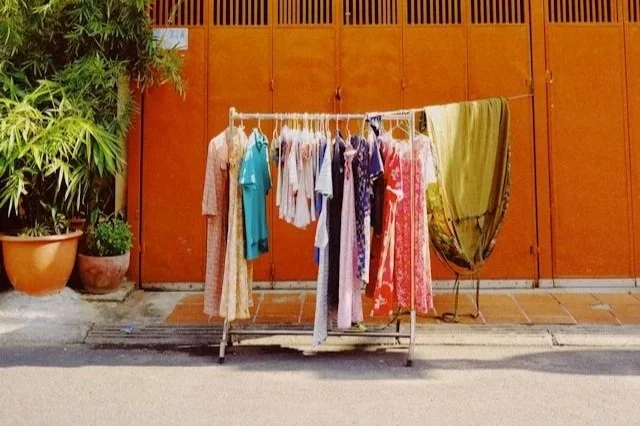
Seeing myself as neurocomplex lets me treat other identity labels more like clothes in a wardrobe. There are some I wear proudly and often. There are some I keep for specific situations, because they open particular doors or make certain conversations easier. There are some I have tried on, thanked for their service, and quietly put back on the rail.
The crucial difference is that I am the one opening the wardrobe. I get to ask, what do I feel like wearing today. What fits the weather of my life right now. What lets me move and breathe. I no longer feel obliged to wear the same outfit every day just because it helped once, or because other people now recognise me in it.
That does not mean labels are bad or that we should all throw them away. For many of us they have been vital stepping stones. A diagnostic label can unlock medication, protections and community. A sexuality or gender label can make it safer to find your people. A cultural or racial label can connect you to history and pride. I would not want to take any of that away.
What I am more interested in now is consent and fit. Do I choose this label, today, for reasons that feel good in my body? Does it help me understand myself, communicate what I need, or find my place in the world? Or am I wearing it because I feel I should, because I want to be believed, because I am scared of what it might mean to take it off?
The birthday suit of labels
When I look at it that way, neurocomplexity feels like the birthday suit of labels for me. It is the base layer I can live in even when I am not wearing anything else on top. It says, my brain and body are complex, overlapping and in motion. It does not try to flatten me into one thing.
From there, I can decide what to put on for the day. Maybe ADHD is the soft hoodie I wear to talk about time blindness and focus with clients. Maybe highly sensitive person is the cardigan I pull on when I need to honour how much noise and light can overwhelm me. Maybe some days I go barefoot and label free, and that is allowed too.
Maybe, you might want to take a quiet moment with your own wardrobe of labels. Which ones still feel like soft cotton against your skin. Which ones itch the second you put them on. Which ones belong to an older version of you that you have outgrown. You do not have to burn them all. You are allowed to fold some away, try different combinations, or walk out of the house in something that feels truer today.
And if you are tired of wrestling with labels on your own, especially around ADHD and the more complex, overlapping and quite possibly messy ends of neurocomplexity, this is the kind of work I do with clients.
We explore how your particular brain and body show up in your work, relationships and inner life, then we design ways of living that fit you, not just the labels. If that sounds helpful, you are welcome to reach out and start a conversation or book a call.